Authors:
Dr Mihai Radu Ionescu
Acute Stroke Unit, Neurology Department, Colentina Clinical Hospital, Bucharest, Romania
Dr Atilla Ozcan Ozdemir, MD, FESO, EDNI
Director of Stroke Center, Eskisehir Osmangazi University, Türkiye
Stroke Neurologist, Neurocritical Care Specialist, Interventional Neurologist
The increasing demand for neurointerventional specialists has led to a growing acceptance of neurologists into dedicated neurointerventional training programs. In this blog piece we present two perspectives of training pathways for neurologists in the delivery of endovascular thrombectomy: Romania and Turkey.
Dr Mihai Ionescu:
Training in neurointervention is carried out according to national authorities and follows country-specific training pathways. Consequently, training duration, procedural requirements and eligible trainee backgrounds vary considerably across Europe. To promote standardisation and high-quality training, the European Society of Minimally Invasive Neurological Therapy (ESMINT), European Society of Neuroradiology (ESNR) and the European Union of Medical Specialists (UEMS) have previously published1 guidelines outlining recommended training requirements in interventional neuroradiology.
Since 2023, Romania has implemented a dedicated subspecialty neurointerventional training program that accepts trainees from diverse medical backgrounds including radiology, neurology, neurosurgery and pediatric neurology. We believe this model may be informative for healthcare systems currently facing shortages of neurointerventionalists and low endovascular treatment rates.
I would strongly recommend clinical fellowships such as the European Stroke Organisation Department-to-Department Visit Programme2,3 or the ESMINT fellowships4 which currently provide valuable exposure for neurologists in high-volume European centers.
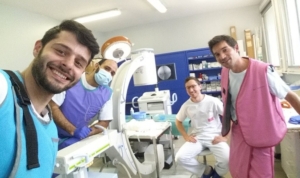
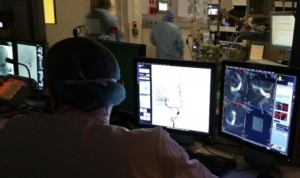
Dr Ionescu personal archive photographs from the 2020 ESO Department-to-Department Visit Programme at the Centre Hospitalier Universitaire Dupuytren, Interventional Neuroradiology Department, Limoges, France which subsequently led to Fellowship Training and completion of a University Diploma in Interventional Neuroradiology in Limoges.
Dr Atilla Odezmir:
Under the umbrella of the Turkish Cerebrovascular Diseases Society (Türkiye Beyin Damar Hastalıkları Derneği), a structured “Interventional Neurology” diploma (board certification) program for neurologists was initiated in 2012. As of 2026, the number of board-certified “Interventional Neurologists” trained through this one year program who actively perform mechanical thrombectomy and endovascular secondary prevention procedures for ischemic stroke is 65. Among them, 16 are women interventional neurologists. In response to the landmark randomised endovascular therapy trials published in 2015, a two-step training model was adopted, aiming to prepare interventional neurologists not only for mechanical thrombectomy but also for comprehensive stroke center organisation and the development of regional stroke systems of care.2,3
Standardised accreditation and competency-based assessment are central to ensuring patient safety and consistent quality across centers.2,3 The programmes have been award winning and supported by the Turkish government.
This has changed the face of stroke care in Turkey – as of 2026, 29 comprehensive stroke centers across the country are led by interventional neurologists, and mechanical thrombectomy is routinely performed in these centers.
Our accredited training centers under the Turkish Cerebrovascular Diseases Society are prepared to host and train visiting interventional neurologists from abroad.
In collaboration with the European Stroke Organisation, we are ready to welcome neurologists from across Europe to provide both structured mechanical thrombectomy training and capacity-building support for European countries with unmet needs for thrombectomy services: esoinfo@eso-stroke.org
- Sasiadek M, Kocer N, Szikora I, et al. Standards for European training requirements in interventional neuroradiology guidelines by the Division of Neuroradiology/Section of Radiology European Union of Medical Specialists (UEMS), in cooperation with the Division of Interventional Radiology/UEMS, the European Society of Neuroradiology (ESNR), and the European Society of Minimally Invasive Neurological Therapy (ESMINT). J NeuroIntervent Surg. 2020;12(3):326. doi:10.1136/neurintsurg-2019-015537
- Mehmet Akif Topçuoğlu, Atilla Ozcan Ozdemir. Acute stroke management in Turkey: Current situation and future projection. European Stroke Journal 2023;8: 16-20.
- Atilla Ozcan Ozdemir, Semih Giray, Erdem Gürkaş. Training standards for neurointerventional procedures regarding endovascular treatment and secondary endovascular protection of acute ischemic stroke. Turkish Cerebrovascular Disease Journal. 2023;29 (3):106-114
ESOC is Europe’s leading forum for advances in research and clinical care of patients with cerebrovascular diseases. ESOC 2026 will live up to its expectation, and present to you a packed, high quality scientific programme including major clinical trials, state-of-the-art seminars, educational workshops, scientific communications of the latest research, and debates about current controversies. Learn more.
