Awardee: Mariam Goletiani, Geo Hospitals Tbilisi Multi-Profile Medical Center, Tbilisi, Georgia
Host Institution: St. George’s Hospital, London, UK
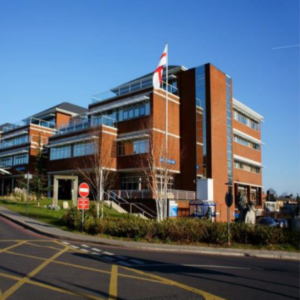
In November 2025, I had the honour of visiting St. George’s Hospital in London as part of the ESO Department-to-Department (D2D) programme. For four weeks, I worked in the Hyper Acute Stroke Unit (HASU) and had the opportunity to observe its daily workflow, participate in clinical discussions, and learn from a highly organised multidisciplinary team.
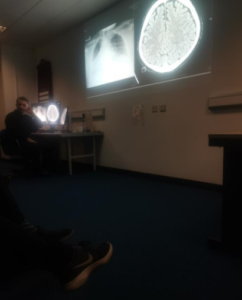
The HASU has 20 beds, and every morning the team – including neurologists or geriatricians, residents, nurses, physiotherapists, nutritionists, and speech therapists – meets for a structured pre-ward round discussion. Each member documents important clinical, laboratory, and radiological information for all patients. After this meeting, doctors review updated imaging and laboratory results, while a neuro-radiologist joins the team on Mondays to discuss CT and MRI findings. During the ward round, patients are examined, results are reviewed at the bedside, and family members are informed about the treatment plan. After the round, the team discusses new information and finalises the plan for investigations and treatment.
What impressed me most was the high level of involvement of junior doctors and residents in every stage of patient care. Each team member has a clearly defined role, from the emergency department through discharge, which ensures smooth coordination and efficient workflow. The thrombolysis call system is another strength of the unit. When the on-call team receives the alert, two residents and one stroke nurse arrive in the Emergency Department within 10 minutes. Their actions follow clear protocols and are supervised by the on-call neurologist, contributing to a rapid door-to-needle time
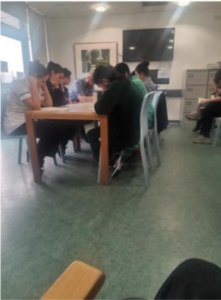
After returning to Georgia, I delivered a presentation to my department about the HASU model, which does not currently exist in our healthcare system. I explained how the unit is organised, how daily work is structured, and how thrombolysis is managed in a timely manner. I emphasised that neurologists and geriatricians are directly involved in interpreting neuroimaging and making important treatment decisions, while in my country, we are more dependent on the radiology team for these evaluations. I also discussed differences in acute stroke management, secondary prevention strategies, and ongoing stroke research at St. George’s Hospital. My colleagues asked many questions, which showed their interest and
eagerness to improve stroke care.
Overall, this experience strengthened my clinical skills and deepened my understanding of stroke care organisation. It inspired me to apply some of these practices in my home institution, particularly regarding structured teamwork, efficient thrombolysis, and multidisciplinary collaboration. I am grateful to ESO for this opportunity and to the entire HASU team for their openness and support. I would like to especially thank my supervisor and Head of Department, Dr Anthony Pereira, for guidance and encouragement during my stay.
ESOC is Europe’s leading forum for advances in research and clinical care of patients with cerebrovascular diseases. ESOC 2027 will live up to its expectation, and present to you a packed, high quality scientific programme including major clinical trials, state-of-the-art seminars, educational workshops, scientific communications of the latest research, and debates about current controversies. Learn more.
