Stroke Simulation Training
Train the Trainer Workshop
15–16 October 2026 | Florence, Italy
Azienda Ospedaliero-Universitaria Careggi
Simulation Workshop: The potential to positively impact clinical practice
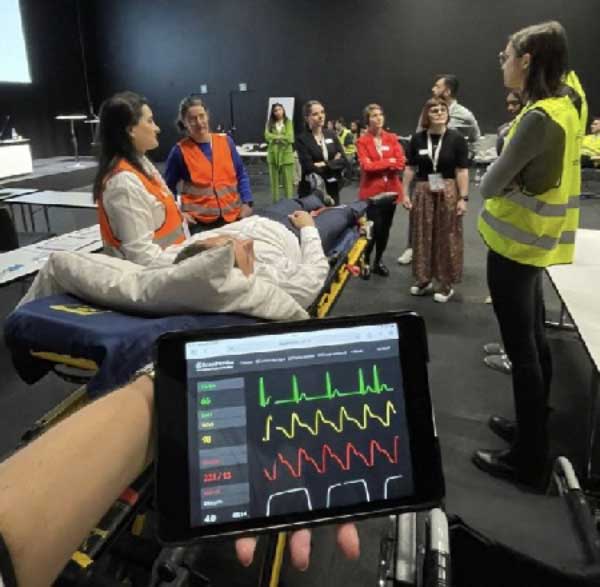
Simulation education has been shown to improve timely decision-making related to reperfusion treatments, stroke pathways, organisational aspects of multidisciplinary stroke management and clinical outcomes. Simulation is well established as an educational modality to improve clinical performance and has been associated with an improvement in both mortality and morbidity. An effective stroke response involved interdisciplinary collaboration, while especially team communication and an effective cooperation is essential. These are key learning objectives of simulation training.
The ESO Simulation Education Committee was established to advance stroke education through simulation and to broaden access for physicians and paramedics involved in stroke care across Europe. Over recent years, multiple simulation workshops have been successfully delivered at ESO Congresses. However, wider implementation requires the structured training of instructors to enable dissemination at local and regional levels. The present Train-the-Trainer workshop therefore aims to expand simulation training opportunities by equipping participants with the skills to design scenarios and plan and conduct simulation programmes tailored to their specific clinical environments.
The target audience of our workshop come from multiple disciplines (neurologist, stroke physician, neuro-interventionalist, nurse, etc.), enabling multidisciplinary and harmonization of treatment paradigms. Participants will be enabled to set up their own simulation program and train local acute stroke care teams in order improve stroke care at their institution, region or country. Our programme is designed to provide attendees with advanced skills in the pedagogy of simulation to improve educational experiences for their home institutions.
It is anticipated that the flow on effect will be improved care delivery and clinical outcomes for patients with stroke.

09:00–09:30 — Welcome and opening
09:30–10:00 — Session 1: Local Stroke & Simulation needs analysis
10:00–10:40 — Session 2: How to build a simulation scenario
10:40–11:00 — Coffee Break
11:00–11:30 — Session 3: Simulation Situation
– Local simulation experiences
11:30–11:50 — Session 4: Pre-brief – setting up for success
11:50–13:00 — Session 5: Debrief & feedback
– The meaning of debriefing and how to master it
13:00–13:45 — Lunch Break
13:45–16:00 — Practical Session #1
– Putting it into action: running a simulation
16:00–16:30 — Coffee Break
16:30–18:30 — Practical Session #2
– Putting it into action: preparing scenarios
08:30–09:00 — Coffee & Recap
09:00–10:30 — Practical Session #3
– Putting it into action: preparing scenarios (cont.)
10:30–11:30 — Practical Session #4
– Putting it into action: running and debriefing a scenario
11:30–12:00 — Coffee Break
12:00–13:00 — Practical Session #4 (cont.)
– Putting it into action: running and debriefing a scenario
13:00–14:00 — Lunch Break
14:00–16:00 — Future directions and Cooperation
16:00–17:00 — Event closing
#
The application period is now open until 15 July 2026.
Interested applicants are requested to submit the following documents:
Complete applications should be sent via email to the address indicated on the application form.
Please note that incomplete applications will not be considered.
The deadline to receive applications is 15 July 2026.
ESO Members: 300 EUR
Non-ESO Members: 450 EUR
Low/middle Income Countries (according to the Worldbank rating): 200 EUR
Registration fees cover tuition, meals and coffee breaks. Participants are expected to cover their travel expenses, hotel and any personal expenses outside of the official programme.
Participating candidates will receive a certificate of attendance.
Selection criteria:
Selection of participants:
Importantly, the learning experience will continue beyond Florence: an online follow-up session in April 2027 is planned to support participants as they implement simulation training at their own centres also including the possibility for further networking within an alumnus forum.
In addition to the application and co-applicants, the educators for the programme will be the current members of the ESO Simulation Committee. Appointment to the committee is via expression of interest application followed by a selection process to ensure members have the required expertise and competencies to lead simulation education activities. ESO Simulation Committee will act as faculty for the programme, designing and delivering the content.
All members of the committee are educated in simulation training and run programmes on local, regional or national level. Several members also run active scientific research groups on simulation education and/or hold an educational degree in addition to their medical certification.
The members of the committee are:
Bastian Volbers, Switzerland (Chair)
Alvaro Lambea Gil, Spain
Estelle Seyman, Israel
Francesco Arba, Italy
Jatinder Minhas, UK
Lauren Sanders, Australia
Lina Palaiodimou, Greece
Martin Kurz, Norway
Martin Punter, New Zealand
Yvonne Zuurbier, Belgium