Author: 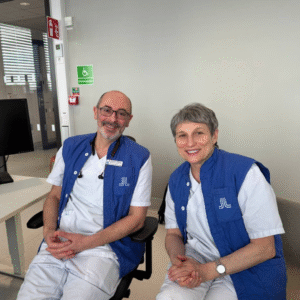 Dr. Maryna Guliaieva
Host Institution: Karolinska University Hospital & Danderyd Hospital, Stockholm, Sweden
As part of the European Stroke Organisation’s Department to Department (D2D) Visit Programme, I had the privilege of completing a short observership at the Department of Clinical Neuroscience, Karolinska University Hospital.
The Karolinska University Hospital is one of Europe’s largest and most prestigious academic medical centers. It operates across two main campuses — Karolinska Solna and Karolinska Huddinge — and is closely affiliated with the Karolinska Institutet, forming a powerful hub for medical research, education, and advanced clinical care. The hospital plays a pivotal role in Sweden’s healthcare system and is internationally recognised for its leadership in stroke care, neurosciences, and translational medicine. Danderyd Hospital, which belongs to the same healthcare region, is one of Sweden’s largest emergency hospitals and shares an academic affiliation with the Karolinska University. It has strong clinical and academic programs in neurology and rehabilitation medicine.
My main goal during this observership was to familiarise myself with the advanced stroke care pathway implemented at Karolinska, including the integrated stroke network that ensures seamless transitions from hyperacute stroke care through rehabilitation and social reintegration.
This multidisciplinary approach is designed to maximise patient outcomes and quality of life following stroke.
The visit began with a meeting with Dr. Michael Mazya, Associate Professor and Senior Consultant Neurologist specialising in cerebrovascular diseases and acute neurological care. He works at the Department of Clinical Neuroscience, Karolinska Institutet, and serves as Head of the Stroke Service at the Department of Neurology, Karolinska University Hospital.
We began with a clinical orientation in the relevant department of Karolinska University Hospital, where I was introduced to the clinical workflows and organisational structure involved in the treatment of acute stroke patients.
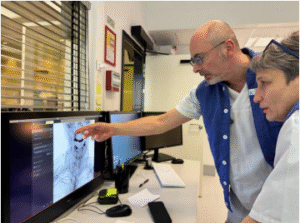
Acute stroke care at Karolinska meets the highest international standards. The “door-to-needle” time for thrombolysis is impressively short, averaging just 15–18 minutes. The team of neurologists, radiologists, and nurses functions as a unified and highly coordinated system. Early access to patient medical information, transmitted by ambulance teams prior to hospital arrival, significantly supports timely clinical decision-making and appropriate neurointervention.
During the following days, we conducted a site visit to Danderyd Hospital, where we met with the Department of Neurology and the Department of Rehabilitation. These sessions provided valuable insight into subacute and long-term care strategies, including both inpatient and outpatient stroke rehabilitation models. The meetings also fostered professional exchange and laid the groundwork for potential future collaboration.
Together with Dr. Mazya, I continued to explore the regional stroke advisory service at Karolinska. One particularly striking experience was learning about the role of medical aviation in stroke care, illustrated by a case in which a patient was transported by helicopter from a remote island. This underscored the vital importance of clear protocols and structured algorithms to ensure effective coordination between pre-hospital and in-hospital care.
An important element of clinical practice at Karolinska is the weekly interdisciplinary cerebrovascular conference, where complex cases such as cervical carotid artery disease and PFO are reviewed and discussed. I also attended a neurovascular multidisciplinary meeting focusing on rare and challenging conditions such as Moyamoya disease, intracranial artery stenosis, and intracranial stenting. This format of collaborative discussion and continuous professional education is highly effective, and we plan to implement similar multidisciplinary meetings as a routine practice at our hospital in Kyiv.
In addition, numerous meetings with colleagues from various departments — including anesthesiology, neurology, interventional neuroradiology, and neurorehabilitation — provided a valuable platform for the exchange of ideas and experiences related to stroke care in both Sweden and Ukraine. This observership provided a unique opportunity to gain in-depth insight into one of Europe’s leading stroke care systems. The structured program, rich interdisciplinary interaction, and exposure to both acute and rehabilitative services were highly educational and inspiring.
I am sincerely grateful to Dr. Michael Mazya and the entire teams at Karolinska University Hospital and Danderyd Hospital for their warm hospitality and excellent organisation of this visit.
Special thanks to the European Stroke Organisation (ESO) for providing the opportunity to participate in this invaluable programme. I am confident that this experience will contribute to further collaboration between our institutions and to the advancement of stroke care both regionally and internationally.
ESOC is Europe’s leading forum for advances in research and clinical care of patients with cerebrovascular diseases. ESOC 2026 will live up to its expectation, and present to you a packed, high quality scientific programme including major clinical trials, state-of-the-art seminars, educational workshops, scientific communications of the latest research, and debates about current controversies. Learn more.
