YSPR Design Research Workshop. Today, we introduce Laurens van Herck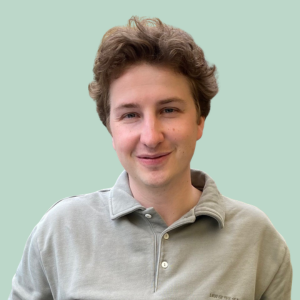
Laurens van Herck is a fifth-year Neurology resident in Belgium, currently completing the final two years of his clinical training to become a general neurologist. Eight months ago, he expanded his focus by beginning a PhD in stroke research, and he is currently balancing his clinical duties with his academic research.
What is the main goal of your current research project?
We are investigating whether the hypodensity severity or volume of the baseline infarct core modifies the benefit of endovascular thrombectomy in low ASPECTS patients. To measure this, we use a tool our team developed called relative non-contrast computed tomography, abbreviated rNCCT. This is an automated post-processing method on a non-contrast CT that compares relative regional differences in brain tissue density between brain hemispheres. The rNCCT enables quantitative analysis, eliminates interrater variability, and has the same accuracy as CT perfusion for infarct detection in late-presenting patients.
What do you hope will be the most important outcome of your work?
We hope our automated, quantitative assessment of the baseline infarct core provides additional value to ASPECTS and will make it possible to further assess the effect of these imaging parameters on thrombectomy treatment effect. In the end, we want to explore if there is an upper limit on the hypodensity severity or volume of our core lesion to derive benefit from treatment.
Who has influenced your career the most so far?
My career has been most significantly influenced by Professor Robin Lemmens. His ability to seamlessly integrate extensive clinical responsibilities with high-level academic research sets an extraordinary standard. Yet, it is his unwavering kindness and genuine support that make him truly exceptional. As I concurrently complete my neurology residency and pursue my PhD, he serves as an absolute role model in all aspects of my professional development, exemplifying both the ideal clinician-scientist and a profoundly compassionate mentor.
What keeps you motivated during difficult phases of research?
During the tough phases of research, what really keeps me going is remembering that life is far broader than work and academia. When projects stall or the workload feels overwhelming, I find my anchor outside the hospital and the lab. It is those simple, everyday moments of happiness with friends and family that put everything back into perspective. These connections remind me of the bigger picture and give me a much-needed mental reset. In the end, having that balance makes the long hours and inevitable setbacks completely worth it, and it gives me the energy to return to my work with a clear and focused mind.
Where do you see your research field in the next 5–10 years?
I expect the AI revolution we are currently witnessing to really snowball into stroke research. For decades, research has relied on slow, manual data collection, but now, algorithms are stepping in to instantly analyze millions of data points that would be impossible for a human to process. By unraveling hidden biological patterns we could have otherwise missed, this technology could finally help us deliver truly personalized treatments. Nonetheless, I don’t believe AI is ever going to replace us as researchers. Instead, it’s just going to take over the boring stuff, freeing us up to focus on the creative, life-saving work of getting better treatments out of the lab and into hospitals much faster.
Why are meetings like ESOC important for early career researchers?
As an early career researcher, it’s incredibly easy to get stuck in the bubble of your own lab. Going to a major meeting like ESOC changes that completely. It’s the perfect place to broaden your horizons and gather new ideas. But honestly, the biggest benefit is the people. The famous names you constantly cite in your papers are suddenly just regular people grabbing a coffee next to you. Approaching the senior scientists you admire is definitely intimidating but taking that leap could give you a fresh perspective on your own work and even establish new collaborations.
ESOC is Europe’s leading forum for advances in research and clinical care of patients with cerebrovascular diseases. ESOC 2026 will live up to its expectation, and present to you a packed, high quality scientific programme including major clinical trials, state-of-the-art seminars, educational workshops, scientific communications of the latest research, and debates about current controversies. Learn more.
