YSPR Design Research Workshop. Today, we introduce Johannes Teller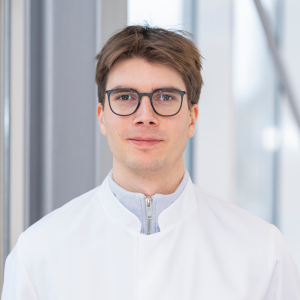
As a neurology resident and clinician-scientist at Hannover Medical School, Johannes focusses on post-stroke and postoperative inflammation and its impact on functional, cognitive, and neuropsychiatric outcomes. Among other approaches, he studies biomarkers within the ERA-Net NEURON-funded “CRESCENDO” consortium. Through programs such as the ESO Summer School 2026 and the Young DSG, he was able to build a growing network with fellow early-career researcher.
What is the main goal of your current research project?
“My current research focuses on identifying biomarker to enhance our understanding of post-stroke recovery and secondary prevention. Specifically, within the framework of the ERA-Net NEURON ‘CRESCENDO’ project, I am investigating the complex interplay between systemic inflammatory, stress-induced, and damage-based pathways. My goal is to delineate the specific biological axes that drive recurrent ischemic events, as well as those that contribute to functional outcomes. By mapping these biomarkers together with our project team, we aim to better understand the underlying mechanisms and ultimately support the development of more precise, personalized treatment strategies for stroke patients.”
What do you hope will be the most important outcome of your work?
“Ultimately, I hope that my work will lead to a deeper understanding of the pathophysiological processes in the subacute and chronic phases post-stroke. By identifying and mapping these key inflammatory and neuroaxonal pathways, we aim to support the development of predictive models and explore new therapeutic approaches. Specifically, I hope that my research will pave the way for future strategies that target the modulation of these specific biological pathways, thereby significantly improving functional outcomes for our patients.”
What has been the most surprising finding in your research so far?
“The most striking insight is that the predictive power lies in the synergistic combination of biomarkers rather than in isolated axes. We have observed that the complex interplay between systemic inflammatory, stress-induced, and damage-based pathways is far more informative than assessing any single parameter. Beyond the scientific findings, it has been an incredibly enriching experience to see how seamless and productive this European collaboration has been—working within the ‘CRESCENDO’ consortium has proven that such integrated, multinational team science is truly the key to tackling complex stroke pathophysiology.”
What are the next steps for your project after ESOC?
“Following ESOC, my immediate priority is to finalize and submit our core manuscript for publication. In parallel, we are working on several targeted sub-analyses to deepen our understanding of specific patient subgroups. Ultimately, building upon the foundations of the consortium, we are already planning follow-up studies within this multinational framework to further advance our research program.”
What keeps you motivated during difficult phases of research?
“What really keeps me motivated is the collaborative spirit within our team. Talking openly about challenges, questioning assumptions, and shaping our research questions together is something I really enjoy and find motivating. I also value the exchange with other early-career researchers—structured discussions often turn what initially feels like a bottleneck into an opportunity for new ideas and growth. When research becomes particularly demanding, I find it important to step back through cultural activities or creative pursuits. These moments help me regain perspective and often bring the clarity and fresh inspiration that helps me return to the work with a clearer mindset.”
Why are meetings like ESOC important for early career researchers?
“I believe meetings like ESOC are essential platforms—not only for gaining insights into the latest research and methodology but also for engaging with experienced mentors in a supportive yet critically constructive atmosphere. For me, the most significant value lies in the networking aspect: ESOC allows us to meet European collaborators and build lasting connections with peers. Events like the ESO Summer School are particularly transformative, as they provide high-level academic input while fostering a permanent community among young researchers. Exchanging ideas with peers is incredibly valuable—it not only helps us better understand the current research landscape, but also supports us in shaping our own projects and moving our work forward together.”
ESOC is Europe’s leading forum for advances in research and clinical care of patients with cerebrovascular diseases. ESOC 2026 will live up to its expectation, and present to you a packed, high quality scientific programme including major clinical trials, state-of-the-art seminars, educational workshops, scientific communications of the latest research, and debates about current controversies. Learn more.
