Author: Christian Ovesen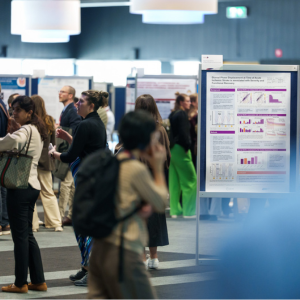
I have thoroughly enjoyed attending ESOC this year in the beautiful city of Maastricht. The scientific programme offered incredible insights into the latest stroke research. Beyond the sessions, the historic charm of Maastricht provided a wonderful backdrop for networking and catching up with old friends and colleagues. The poster session on Day 2 included many interesting studies, reflecting a truly vibrant and scientifically prolific stroke community. I would like to highlight a couple of posters that caught my eye and sparked my interest.
One of my top picks from the Best Poster category was: “Effect of Intensive Blood Pressure Lowering on Perihematomal Edema in Acute Intracerebral Hemorrhage: Pooled Analysis of the Four INTERACT Trials” by Ren et al. This study was based on individual participant-level data from the four INTERACT trials assessing the effect of blood pressure lowering among patients with acute ICH. Oedema growth was defined as the volume increase from baseline to the 24-hour CT scan. A total of 2,549 participants were included, with haematoma and oedema volumes well-balanced at baseline. Adjusted for other baseline variables, strong evidence (p=0.004) was found for an association between intensive blood pressure lowering and 24-hour oedema growth. Participants randomized to intensive blood pressure lowering had 1.16 mL (95% CI 0.37 to 1.95) less mean growth within the first 24 hours. Additionally, there was strong evidence of time-dependence in the treatment effect (p for interaction = 0.009), with the upper bound of the confidence interval crossing the no-effect line 2.2 hours after onset.
From the Best Poster category, I would also like to highlight: ”Intravenous Thrombolysis in Acute Ischemic Stroke Patients on Direct Oral Anticoagulants Undergoing Endovascular Thrombectomy” by Matusevicius et al. The study aimed to investigate the risk-benefit of adding bridging therapy (intravenous thrombolysis plus endovascular therapy ) in acute ischaemic stroke patients on DOACs undergoing EVT. The study utilised data from the SITS international registry. Of the 1,991 patients on DOACs treated with EVT, 317 received intravenous thrombolysis. After propensity score matching, no difference in favourable outcome (modified Rankin Scale 0-2) at 3 months was found (71 [36.0%] versus 155 [35.1%], p=0.898). In addition, no difference in symptomatic haemorrhagic transformation was observed.
Focusing on the Acute Ischaemic Stroke Management category, the work of Ma et al. “Outcome of Direct Endovascular versus Bridging Therapy for Ischemic Stroke due to Medium Vessel Occlusion” deserves mention. The study presents data from patients in the multicentre Reperfusion therapy for acute ischemic STrOke due to large aRtEry occlusions (RESTORE) registry with CT-angiography-verified medium vessel occlusion (MeVO) who underwent endovascular therapy. Patients were treated either with bridging therapy (intravenous thrombolysis plus endovascular therapy ) or EVT alone. Among the 140 eligible patients, 41 received bridging therapy and 99 received EVT alone. Bridging therapy was associated with 156% higher odds of being in a more favourable modified Rankin Scale category after 3 months (cOR 2.56, 95% CI 1.23 to 5.35).
From the Recovery, Rehabilitation and Outcome category, I would like to showcase: “Death and dependency 90 days after in-hospital ischaemic stroke in Sweden: a nationwide register study” by Ben-Shabat et al. This study utilised data from the Swedish Stroke Registry (Riksstroke) spanning 2010 to 2019. The study aimed to compare outcomes between patients suffering from in-hospital ischaemic stroke (IHIS) and those with community-onset ischaemic stroke (COIS). Of the 198,864 stroke patients included, 11,420 (5.7%) were classified as IHIS. Patients in the IHIS group generally presented with a higher burden of comorbidity and greater stroke severity, with a median NIHSS of 7 compared to 3 in the COIS group. While a comparable number of IHIS and COIS patients received intravenous thrombolysis, the door-to-needle time was notably shorter for IHIS patients (80 minutes versus 125 minutes for COIS). Even after adjusting for comorbidities, stroke severity, and treatment, IHIS was associated with 162% higher odds of suffering death or dependency within 90 days (OR 2.62, 95% CI 2.48 to 2.76).
ESOC is Europe’s leading forum for advances in research and clinical care of patients with cerebrovascular diseases. ESOC 2026 will live up to its expectation, and present to you a packed, high quality scientific programme including major clinical trials, state-of-the-art seminars, educational workshops, scientific communications of the latest research, and debates about current controversies. Learn more.
