Awardee: Ketevan Dzagoevi, New Hospitals, Tbilisi, Georgia
Host Institution: Christliches Klinikum Unna, Germany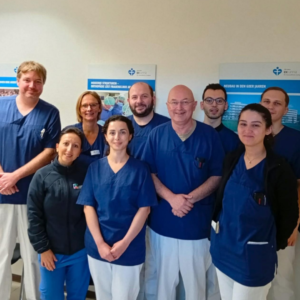
Last month, I had the privilege of spending two highly productive weeks at Christliches Klinikum Unna West (CKU) in Unna, Germany, as part of the ESO D2D programme. During my stay, I was fully integrated into the daily activities of the Neurology Department under close team supervision.
My primary interest was focused on the diagnostics and treatment of stroke patients, although the scope of clinical exposure was broad and diverse. Each working day began early with a departmental meeting, during which events from the night shift were discussed. This was followed by morning rounds, where patients were examined, clinical notes were taken, and laboratory tests and diagnostic studies were ordered and, in some cases, performed. Subsequently, another team meeting took place to review the findings from the rounds and discuss management plans for each patient. After lunch, imaging studies were reviewed in close collaboration with the radiology department. The workflow was dynamic and well structured; the day passed swiftly and was notably busy – the majority of routine clinical matters were well taken care of during the first half of the day.

Throughout my stay, I observed numerous differences between the German and Georgian healthcare systems. These differences allowed me to encounter patient populations and clinical scenarios that I would not usually see in my home country, where my practice is predominantly focused on inpatient care. I was exposed to a wide range of diagnostic techniques and participated in the differential diagnosis of rare neurological disorders and conditions.
One of the most memorable and inspiring experiences was the use of neurosonology performed directly by neurologists. While neurosonology itself was not new to me, in my home country, it is typically the domain of another specialty, namely a subspecialty of radiology. Observing how flexibly and efficiently the neurologists in Unna were able to assess the extracranial and intracranial arteries independently highlighted the practical advantages of this approach. This experience strongly motivated me to learn neurosonology myself. Although two weeks were clearly insufficient to gain full proficiency, I have since continued practicing and developing this skill in my home institution.
Another particularly striking aspect was the promptness with which patients sought medical attention at the onset of stroke symptoms. In contrast, delayed hospital presentation remains a significant challenge in my country, and late arrival frequently precludes patients from receiving thrombolytic therapy. This experience reinforced my determination to contribute, to the best of my ability, to improving thrombolysis rates and overall stroke care statistics in Georgia through education, system optimization, and interdisciplinary collaboration. Equally noteworthy was the door-to-needle time of 18 minutes for intravenous thrombolysis, which has become an important personal benchmark for my future clinical practice.
I also observed meaningful cultural differences influencing medical decision-making, particularly regarding end-of-life care and patient autonomy. The German approach places strong emphasis on patient self-determination and advance planning, which contrasts in several ways with practices commonly encountered in my home healthcare system. These observations provided valuable perspective and prompted reflection on how cultural context shapes ethical and clinical decisions.
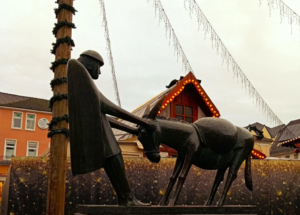
I would like to conclude this report by expressing my appreciation for the town of Unna itself. I was fortunate to visit shortly before Christmas, when the town was beautifully decorated and filled with a warm, festive atmosphere. The welcoming environment of this small town contributed greatly to the overall positive experience of my stay.
Finally, I would like to express my sincere gratitude to the entire neurology team at Christliches Klinikum Unna West for their openness, professionalism, and willingness to share their expertise and tolerate my poor knowledge of German language. I am especially thankful to the Head of the Department, Professor Z. Katsarava, for the leadership, support, and commitment to excellence in stroke care and medical education.
Overall, my participation in the ESO D2D programme at Christliches Klinikum Unna West was both professionally enriching and personally inspiring, and it has had a lasting impact on my approach to stroke care and neurological practice.
ESOC is Europe’s leading forum for advances in research and clinical care of patients with cerebrovascular diseases. ESOC 2027 will live up to its expectation, and present to you a packed, high quality scientific programme including major clinical trials, state-of-the-art seminars, educational workshops, scientific communications of the latest research, and debates about current controversies. Learn more.
