Authors: Alice Caneva, Kadra Abdullahi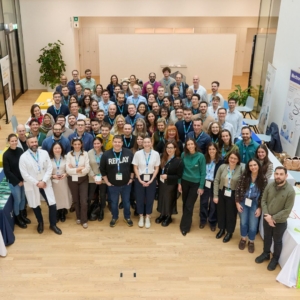
The 13th ESO ESMINT ESNR Stroke Winter School was held in Bern, Switzerland, from January 27 to 30, 2026. Under the leadership of PD Dr. Thomas Meinel, PD Dr. Tomas Dobrocky, Prof. Urs Fischer, Prof. Jan Gralla, PD Dr. Eike Piechowiak and PD Dr. Bastian Volbers, the local organizing team once again delivered an outstanding educational event dedicated to advances in acute stroke care. We also warmly acknowledge the invaluable administrative support provided by Kadra Abdullahi, Alice Caneva, Mara Megert and Selini Tsimachidis, whose coordination ensured the smooth running of the course.
The Winter School reaffirmed its central objective: strengthening interdisciplinary collaboration between neurologists and neuroradiologists throughout Europe. Interest in the program remained remarkably high, with about 200 applications submitted for 66 available places, highlighting its continued relevance and reputation. This year’s participants represented 20 countries: Albania, Austria, Belgium, Bosnia and Herzegovina, Bulgaria, Germany, Italy, Lithuania, Montenegro, Netherlands, Northern Ireland, Norway, Poland, Portugal, Romania, Spain, Sweden, Switzerland, Ukraine and United Kingdom.
The course opened with welcoming remarks from PD Dr. Dobrocky and PD Dr. Meinel, followed by addresses from Prof. Simona Sacco (ESO) and Prof. Jan Gralla (ESMINT, ESNR). From the outset, the scientific sessions tackled key developments in stroke medicine, including global epidemiological trends, recent progress in thrombolysis and mechanical thrombectomy, and innovations in prehospital stroke pathways.
The 2026 edition featured a comprehensive academic program consisting of 30 lectures, four interactive tutorials and three practical workshops. In total, 34 faculty members from seven countries contributed to the teaching program, providing a broad international perspective. The faculty included experts from across Europe fostering lively discussion and exchange of experience across healthcare systems.
A core strength of the Winter School remains its strong practical focus. Participants worked in small groups, allowing close interaction with faculty during hands-on sessions covering neuroangiography techniques and complex endovascular interventions. Tutorials addressed crucial topics such as procedural strategies in endovascular stroke therapy, prevention and management of complications, workflow optimization and advanced imaging interpretation.
Neuroradiologists benefited from simulator-based training and live animal laboratory sessions, where thrombectomy procedures were practiced under direct expert supervision. Neurologists took part in structured stroke simulation workshops designed to replicate real-world clinical scenarios. These sessions emphasized rapid decision-making, interdisciplinary communication, team coordination and time management. The simulation component also served as an introduction to formal simulation certification and encouraged participants to establish regular simulation training at their home institutions.
In addition to the core topics of thrombolysis and mechanical thrombectomy, the 2026 scientific program addressed a broad spectrum of clinically relevant and challenging scenarios. Sessions focused on evolving indications for thrombectomy, stroke in patients with specific risk profiles such as anticoagulation, cervical artery pathologies, haemorrhagic stroke, and diagnostic challenges including stroke mimics and TIA. Interactive case discussions and morbidity/mortality sessions fostered critical reflection, interdisciplinary exchange and a constructive learning culture in acute stroke care.
The success of the 13th Stroke Winter School was made possible through the generous support of our sponsors: 1a Medical, Boehringer Ingelheim, Johnson&Johnson MedTech, Medtronic, OM Pharma, Penumbra, Siemens Healthineers, Stryker, Terumo Neuro, Vascular Medical and Wallaby Phenox. Their commitment allowed us to maintain a high-level educational offering while keeping participation accessible, particularly for early- and mid-career physicians and colleagues from developing European countries.
With another highly successful edition concluded, the organizing committee extends its sincere gratitude to all faculty members and participants for their enthusiasm and commitment to improving stroke care. We look forward to welcoming the stroke community back to Bern for the 14th ESO ESMINT ESNR Stroke Winter School, scheduled for February 2–5, 2027. In response to sustained international interest – including applications from South America, Asia and Africa – the Stroke Center Bern continues to expand its global educational initiatives. Preparations are underway for the next Asian Stroke Summer School and for the further development of the South American Stroke School, both in close collaboration with regional faculty to ensure content tailored to local clinical needs.
ESOC is Europe’s leading forum for advances in research and clinical care of patients with cerebrovascular diseases. ESOC 2026 will live up to its expectation, and present to you a packed, high quality scientific programme including major clinical trials, state-of-the-art seminars, educational workshops, scientific communications of the latest research, and debates about current controversies. Learn more.
