 Author: Dr. Yuriy Sharov
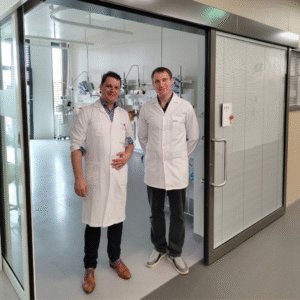
Host Institution: Inselspital Bern University Hospital
Overview of Training and Activities
- Acute Stroke Management: I studied the algorithms of emergency management for acute ischemic stroke, including the administration of thrombolytic agents (tenecteplase) and mechanical thrombectomy. A key point of interest was the clinical approach to using tenecteplase (TNK) as an alternative to alteplase, with individualised dose selection. I also familiarised myself with the rapid diagnostic workflow involving CT, MRI, and perfusion imaging, aimed at minimising door-to-needle time and optimising patient outcomes.
- Work in the Stroke Unit: I observed patient care in the Stroke Unit under continuous neurological and cardiovascular monitoring. I participated in discussions on early rehabilitation planning with the multidisciplinary team (neurologists, physiotherapists, speech therapists, occupational therapists, and neuropsychologists). I learned about standardised clinical protocols focused on early recovery of motor and cognitive functions following stroke.
- Diagnostics and Prevention: I became acquainted with modern diagnostic approaches for identifying the etiology of stroke — including cardiogenic, vascular, hematologic, and rare genetic causes. I studied contemporary approaches to lipid-lowering therapy, including the use of high-dose statins and dual-component therapy to achieve aggressive cholesterol reduction. I participated in consultations on secondary prevention, including the management of patients with TIA and cryptogenic stroke.
Academic and Educational Component
During the visit, I attended clinical case discussions and educational sessions dedicated to: The comparison of Inselspital’s stroke management protocols with national practices. The exchange of experience in diagnostic and therapeutic strategies in acute stroke; Observation of the role of teamwork and process standardisation in achieving high-quality patient outcomes.
Conclusions and Implementation of Knowledge
- The knowledge and skills acquired during the visit will contribute to improving the quality of acute stroke care, particularly in optimising the time intervals before thrombolytic therapy initiation.
- I plan to evaluate the feasibility of implementing tenecteplase-based protocols for ischemic stroke within the framework of national guidelines.
- My competence in selecting and managing intensive lipid-lowering therapy has been enhanced, which will improve strategies for preventing recurrent vascular events.
- The experience gained in multidisciplinary teamwork and rehabilitation planning will be applied to increase the efficiency of post-stroke recovery in my home institution.
The observership at Inselspital Bern, under the supervision of Dr. Seiffge, Dr. Bücke, and Dr. Birner, provided me with invaluable exposure to advanced European standards in stroke management and vascular neurology. The acquired knowledge will be implemented in my daily practice to improve the quality and effectiveness of stroke care in my department.
Acknowledgement
I would like to express my sincere gratitude to the European Stroke Organisation (ESO) for awarding the grant that made the D2D Visiting Programme possible. The support of the ESO has significantly contributed to my professional development and to international collaboration in vascular neurology.
ESOC is Europe’s leading forum for advances in research and clinical care of patients with cerebrovascular diseases. ESOC 2026 will live up to its expectation, and present to you a packed, high quality scientific programme including major clinical trials, state-of-the-art seminars, educational workshops, scientific communications of the latest research, and debates about current controversies. Learn more.
