The “Stroke Rarities” session brought together four outstanding speakers who shed light on uncommon but clinically significant conditions that challenge our daily practice.
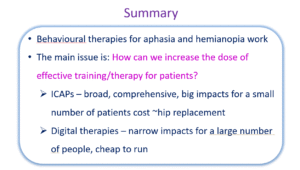
Alex Leff (UK) opened the session with an engaging overview of cognitive rehabilitation, reminding us that cognitive and language impairments remain some of the most disabling yet undertreated consequences of stroke. Aphasia, despite its profound impact, is still not adequately represented in core outcome measures such as the mRS. Alex emphasised that effective, guided rehabilitation—whether via intensive programs like ICAP or digital tools like iTalkBetter—can make a substantial difference in recovery. His central message was clear: high-quality, consistent cognitive rehabilitation is rare, but it should not be.
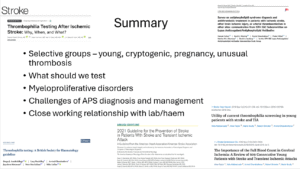
Arvind Chandratheva (UK) followed with a highly practical guide to thrombophilia screening in young or otherwise atypical stroke patients. He highlighted patient groups in whom screening is most relevant—those with young or cryptogenic stroke, stroke in pregnancy, or stroke linked to unusual thrombosis. A focused panel should include antiphospholipid antibodies and JAK2 V617F, with extended testing (e.g. PNH, protein C/S, antithrombin levels, genetic testing) reserved for specific cases. Arvind also pointed out the unresolved question of optimal timing: acute-phase testing may produce misleading results, including false negatives for factor VIII and false positives driven by inflammation.
Tim Magnus (Germany) provided a compelling clinical-to-experimental perspective on cerebral vasculitis, a condition that remains difficult to diagnose due to its heterogeneous presentation, lack of targeted biomarkers, and the limited sensitivity and specificity of biopsy – still considered the “gold standard.” Tim presented emerging mechanistic data from mouse models suggesting T-cell–mediated pathways and highlighted consistent PD-L1 upregulation in both human and experimental disease. These findings open doors for future targeted therapeutic strategies.
Kristiina Rannikmäe (UK) closed the session with a deep dive into rare monogenic cerebral small vessel diseases. She emphasised that these conditions are uncommon but often under-recognised, heavily dependent on how many genes are tested and how patients are selected. COL4A1/2-related disease exemplifies their wide phenotypic range, spanning from early cataracts to severe stroke. She reminded us that patients require careful counselling: avoiding strenuous physical activity and anticoagulants, screening for multiorgan involvement, and planning delivery via C-section in pregnancy. Kristiina highlighted key red flags for monogenic SVD, including family history, young age of onset, systemic features, atypical imaging, or consanguinity.
Overall, the session underscored how rare conditions can illuminate fundamental mechanisms of cerebrovascular disease—and how improved recognition, diagnostics, and targeted interventions can meaningfully change patient outcomes.
__
ESOC is Europe’s leading forum for advances in research and clinical care of patients with cerebrovascular diseases. ESOC 2026 will live up to its expectation, and present to you a packed, high quality scientific programme including major clinical trials, state-of-the-art seminars, educational workshops, scientific communications of the latest research, and debates about current controversies. Learn more.
