The Innovation Session at ESOC 2026 will spotlight the next generation of breakthroughs shaping the future of stroke prevention, treatment, and recovery.
This unique session will bring together academics, clinicians, start-ups, industry leaders, and investors to exchange ideas, showcase innovations, and foster collaborations that accelerate patient impact. Join the innovation session at ESOC 2026, dedicated to showcasing groundbreaking ideas, devices, and technologies that will redefine stroke treatment and care.
Meet the brightest minds across academia, start-ups, and industry – all driving real-world impact: ESOC Innovation Session 2026 – 6 May, 16:30-18:55 CEST
Meet the 2026 winner

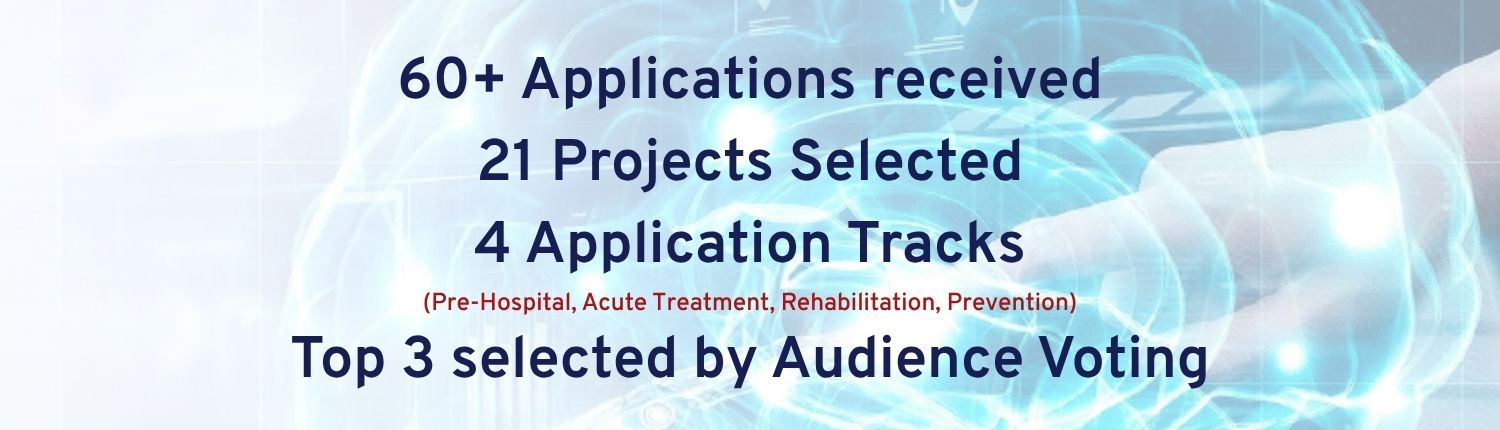
Discover the projects selected to pitch at the ESOC 2026 Innovation Session, as well as other innovative initiatives that applied. Together, these projects represent some of the most promising advancements in stroke care across all stages, from prevention to rehabilitation.
Pre-hospital
Selected to present
- Cortirio Learn More
- iGFAP
Transforming stroke triage from the very first contact, iGFAP combines biomarker testing and AI to identify stroke type in the field. It empowers emergency teams to act faster and prepares hospitals before the patient even arrives. It enables early detection and secure hospital prenotification, accelerating treatment from first contact. - TrianecT
StrokePointer helps identify severe strokes before hospital arrival using portable EEG technology. By directing patients to the right center immediately, it saves critical time and improves outcomes. Learn More - Micro-X Stroke (University of Melbourne)
A breakthrough in portable imaging, the Micro-X Stroke Scanner brings CT directly into ambulances. Lightweight and connected, it enables faster diagnosis and earlier treatment decisions. - Upfront Diagnostics
LVOne is the first rapid blood test to detect LVO stroke directly in the ambulance. Delivering results in minutes, it enables faster decisions and quicker access to life-saving treatment. Learn More - Wellumio
Bringing MRI to the patient, Wellumio is redefining stroke diagnosis in prehospital settings. Its lightweight system enables early, accurate differentiation when every minute matters. Learn More
Additional projects
- ABCDx Learn More
- ECG27
- LMU University Hospital (Point-of-care BD-tau)
- Stroke Alert (Grant Medical College & Sir JJ Hospital, Mumbai)
StrokeAlert accelerates stroke care by centralizing data, imaging, and coordination in a hub-and-spoke model. With “Time is Brain” tracking and severity triage, it speeds decisions and patient routing, using AI to improve outcomes and save lives. - StrokeCap
- Time is Brain Learn More
- Ulster University
Acute Treatment
Selected to present
- Anaconda biomed
The ANA-8 catheter enhances safety and performance in complex stroke interventions. It enables effective flow control, improving outcomes during thrombectomy and stenting. Learn More - ETH Zurich (Swiss Vascular)
This microrobotic platform delivers drugs directly to the clot with unmatched precision. By targeting treatment at the source, it has the potential to significantly improve thrombolysis outcomes. - Hybernia Medical
Hybernia is redefining stroke care with precision brain cooling technology. Its Delta H system delivers rapid, targeted protection to minimize brain damage. Learn More - inSteps
inSteps accelerates innovation in stroke devices through AI-powered simulation. Its platform enables faster design, testing, and optimization across realistic virtual scenarios. Learn More - Methinks
Methinks turns standard CT scans into powerful decision-making tools using AI. It expands access to stroke treatment by enabling accurate assessments without complex imaging. Learn More - Mithridate BV
Mithridate is developing fast, targeted reversal agents for anticoagulants. Its antibody-based approach restores clotting safely without disrupting the body’s balance. Learn More - Nico lab
NICO Lab unlocks hidden insights from CT scans to guide stroke interventions. By understanding clot composition, it enables more precise and effective treatment strategies. Learn More - Neuroprecision Lab (University of Pittsburgh)
HORUS brings AI-driven intelligence to every step of stroke care. From diagnosis to treatment decisions, it delivers real-time guidance and connects patients to clinical trials. - Quantanosis.AI
Quantanosis is pioneering a non-invasive approach to stroke treatment using AI-guided ultrasound technology. By eliminating the need for invasive procedures, it opens access to faster, scalable care. Learn More - Targedbio
TGD001 is a next-generation thrombolytic designed to break down even the toughest clots. With promising early results, it could redefine how stroke and thrombotic diseases are treated. Learn More
Additional projects
- AI-stroke Learn More
- Arianna (Fondazione Policlinico Universitario A. Gemelli IRCCS)
- Feleghiwot Comprehensive Specialized Hospital
- Genomadix Inc. Learn More
- Imperial College London (BeMEWSD)
- IRCCS Istituto delle Scienze Neurologiche di Bologna
- Ischemia Care: Cryptogenic stroke remains a major challenge, as prevention decisions often come before knowing the cause. Using blood-based transcriptomic data from the 1,700-patient BASE trial, this approach predicts likely stroke mechanisms to guide earlier, more precise secondary prevention and treatment decisions. Learn More
- MedicQuant : MedicQuant is a Danish start-up offering a point-of-care platform that measures DOAC levels from whole blood in under 10 minutes. By delivering lab-grade results instantly, it enables faster, safer stroke treatment decisions and improves outcomes when time is critical. Learn More
- Neubond Ltd Learn More
- Openwater : Open-Motion provides a rapid LVO triage signal in under two minutes using a portable optical headset that measures cerebral blood flow directly. It outperforms clinical scales, enabling more accurate early routing decisions at the first point of care. Learn More
- PEDISTROKE
- StroQ (UMG Germany) : This solution uses a Digital Stroke Twin to simulate patient-specific cerebral blood flow with AI and CFD. Validated in clinical studies, it helps identify hypoperfusion and supports more precise, individualized stroke treatment decisions.
- The University of Chicago (UChicago Medicine) : Live Healthy Chicago tackles stroke risk by improving blood pressure control through mobile care teams, clinic support, and public health campaigns. Real-time data tracking and public-private partnerships drive measurable, scalable impact on brain health equity.
- TTM (IRCCS Istituto delle Scienze Neurologiche di Bologna): This trial evaluates targeted temperature management using the CB240_Aurora device in acute ischemic stroke. It assesses its ability to maintain normothermia and improve outcomes such as disability, infarct size, and tolerability.
- University Hospital Zurich (ACES Working Group) : This solution uses graph neural networks to automatically assess collateral circulation from angiography data. By analyzing vessel structure and blood flow over time, it enables objective, reproducible evaluation to guide treatment decisions and assess hemorrhage risk.
Rehabilitation
Selected to present
- CEA (BrainSync project)
BrainSync combines brain-computer interfaces and advanced imaging to personalize stroke recovery. By decoding motor intention, it opens new pathways for targeted rehabilitation.
- eXRt Intelligent Healthcare
Resynk makes high-intensity stroke rehabilitation accessible from hospital to home. Combining VR and AI, it delivers personalized therapy with continuous clinician oversight Learn More - nunaps Inc.
vividbrain is transforming vision recovery after stroke through digital therapy. Clinically validated, it leverages neuroplasticity to turn vision loss into a treatable condition. Learn More
Additional projects
- AdaptEx (Oslo Metropolitan University)
- Chutex Learn More
- ETH Zurich (Skaaltec) : SmartVNS by Skaaltec is a wearable, closed-loop vagus nerve stimulation system that pairs real-time movement detection with targeted stimulation to enhance neuroplasticity. It enables self-managed therapy without surgery, showing promising motor recovery in chronic stroke patients. Learn More
- Neuro Animation Inc : NeuroAnimation Therapy is a motion-based program combining cognitive and motor training. Real-world data show significant improvements in motor function and cognitive performance across stroke and neurological conditions. Learn More
- NeuroCare
- NeurorehabilitationSaMD
- OnTrack Rehab
- Syrebo (Shanghai Siyi Intelligent Technology) Learn More
- Universidade Federal do Rio Grande do Sul
Prevention
Selected to present
- CERN
CAFEIN® Piccolo is a wearable system that detects early physiological changes linked to stroke risk. Private, autonomous, and adaptive, it enables proactive prevention anywhere in the world. - Amsterdam UMC
Additional projects
- Willis AI
Pre-hospital
- Cortirio
- TrianecT
- iGFAP
- Upfront Diagnostics
- University of Melbourne // Micro-X Stroke
- Wellumio
Acute Treatment
- Hybernia Medical
- inSteps
- Nico lab
- Anaconda biomed
- Targedbio
- Mithridate BV
Rehabilitation
- Methinks
- Nanobots
- NeuroSmart AI // UPMC Stroke Institute, University of Pittsburgh School of Medicine
- nunaps Inc.
- BrainSync project
- eXRt Intelligent Healthcare
Prevention
- CERN
- Amsterdam UMC
Objectives
- Showase cutting-edge innovations in stroke diagnostics, treatment, rehabilitation, and long-term care.
- Bridge research and commercialization by connecting academics and innovators with industry and investment partners.
- Encourage cross-sector collaboration for faster translation of scientific advances into clinical practice.
- Educate participants about new and upcoming options and novel treatments.
What to expect
- OPENING: “The Future of Stroke Innovation” – Carlos Molina, Vall d’Hebron Barcelona
- PITCH SESSIONS: Selected innovators will take the stage to deliver 5-minute presentations of their projects, followed by a short Q&A with the moderators
- INTERACTIVE VOTING: At the end of the session, the audience will vote through an interactive system to select the Top 3 projects
- NETWORKING AND INTERACTION
Looking for more details? Contact us at esoinfo@eso-stroke.org.
Who should present
We welcome submissions from:
- Academic researchers with promising studies, pilot data, or clinical trial concepts.
- Start-ups and spin-offs developing novel devices, digital tools, AI solutions, or care models.
- Established companies introducing emerging technologies or pipeline products.
- Clinicians and innovators with transformative ideas that could shape the future of stroke care.
Innovations will be featured in the ESOC Innovation Stage section on the conference website and app (text to be submitted by presenters).
Hear from Carlos Molina on why to join the Innovation Session at ESOC 2026.
The committee behind the selection
Simona Sacco
Italy
President
Carlos Molina
Spain
Vice President
Wim van Zwam
Netherlands
ESOC Local Chair
Mira Katan
Switzerland
Conference Planning Chair
Götz Thomalla
Germany
ESOC Co-Chair
Urs Fischer
Switzerland
President Elect
Participation Categories
Innovation Session Programme